$69 New Patient OfferView Offer
Non-Surgical Decompression • Individualized Care

Spinal Decompression Therapy in Colleyville, TX

Back pain or symptoms traveling into your leg can make sitting, working, exercising and sleeping harder than they should be.

At Summit Spine & Wellness, Dr. Hiebert may use spinal decompression as a non-surgical option for selected patients when your evaluation suggests it may fit your needs and goals.

  • Selected based on your evaluation
  • Non-surgical treatment option
  • May complement chiropractic and rehabilitation

Decompression should fit the plan, not the other way around.

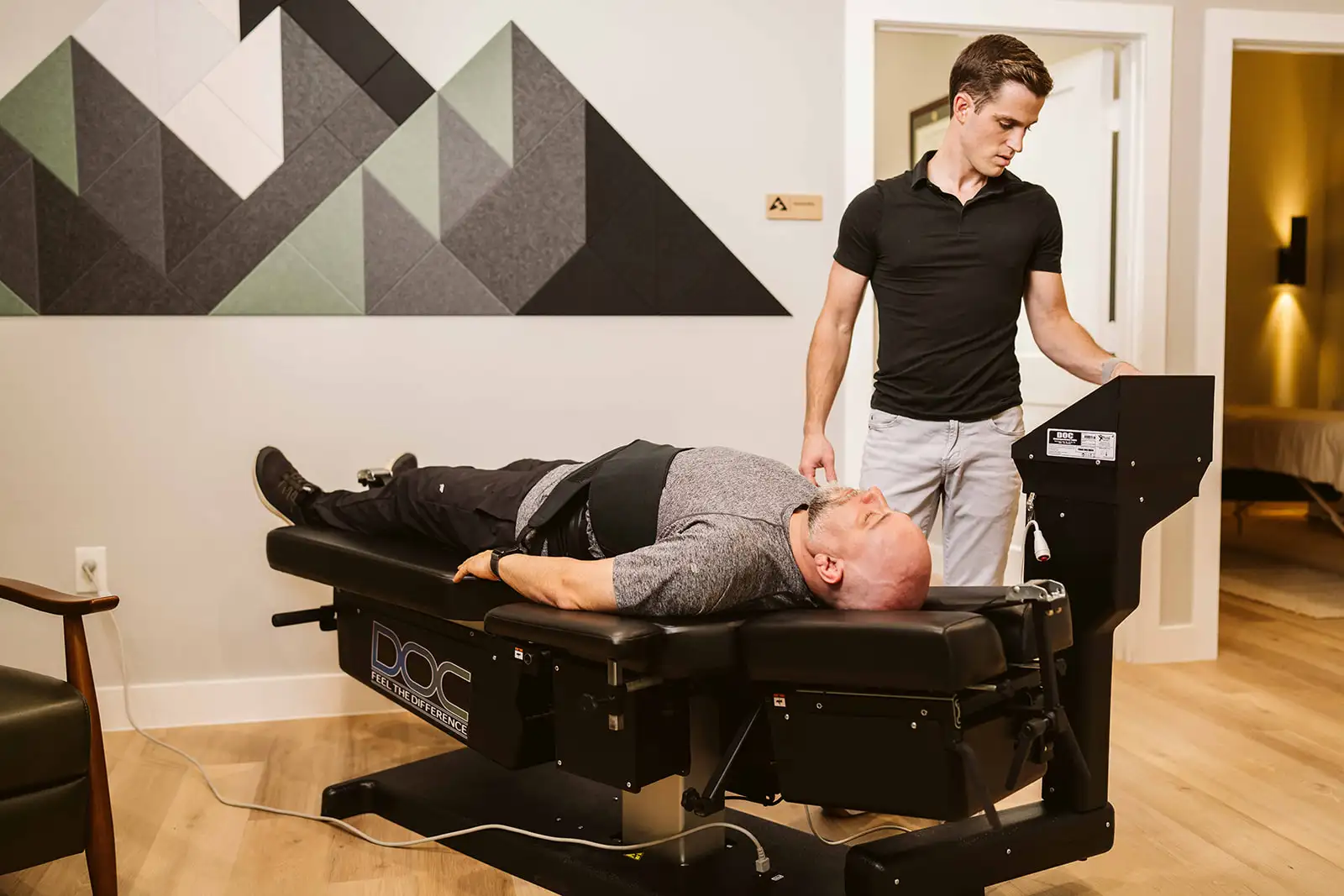
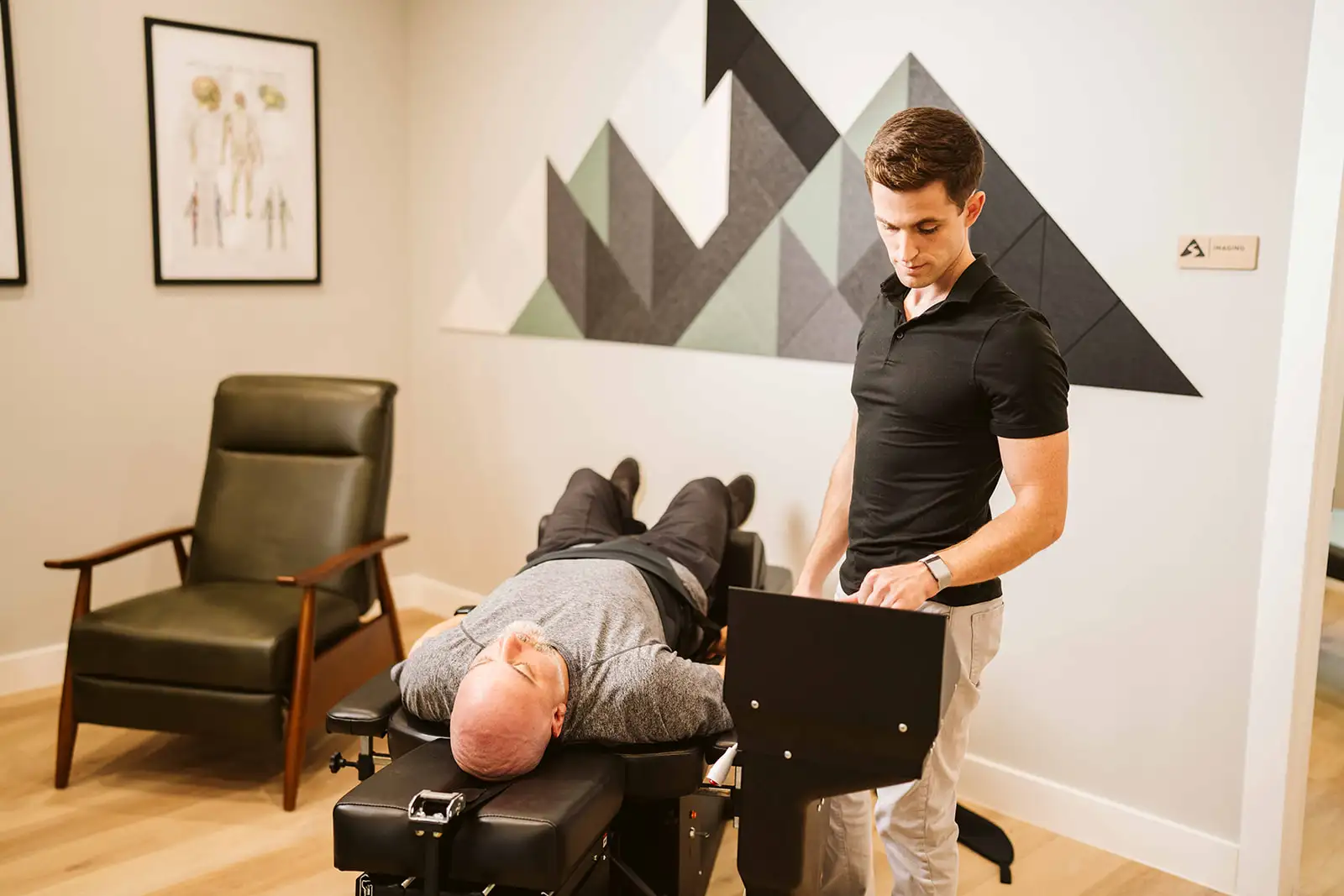
Dr. Spencer Hiebert assisting a patient on a spinal decompression table at Summit Spine & Wellness

Evaluation First

Decompression When It Makes Sense

Evaluation Before Treatment

You Don't Have to Decide If You Need Spinal Decompression

Maybe you were told you have a bulging or herniated disc.

Maybe you have been dealing with persistent lower back pain.

Maybe discomfort travels from your back into your hip or leg.

Or maybe you have been searching for options because what you have already tried has not gotten you where you want to be.

You do not need to decide on your own whether spinal decompression therapy is the answer.

That is part of the reason for the evaluation.

Dr. Hiebert wants to understand the bigger picture:

What are you feeling?

How long has it been going on?

What activities are difficult?

What have you already tried?

How is this affecting work, exercise, travel, sleep, family time, or everyday movement?

What would meaningful progress look like to you?

The Answers Matter

The goal is to identify the most appropriate next step for your care.

Spinal decompression may be worth considering.

Another Summit service may make more sense.

A combination of approaches may be appropriate.

Or Dr. Hiebert may believe you need a different type of evaluation or healthcare provider.

The goal is not to sell you decompression.

A Clear Evaluation-First Process

What Does the Spinal Decompression Evaluation Process Look Like?

You do not need to arrive knowing whether decompression is the right treatment. The evaluation is designed to help determine what actually makes sense next.

01

Start With Your History

Dr. Hiebert first wants to understand:

Where the patient feels pain or discomfort

Whether symptoms travel into the hip, buttock, or leg

Numbness, tingling, weakness, or neurologic symptoms

When the problem started

Previous injuries

Previous surgeries or procedures

What makes symptoms better or worse

Previous chiropractic, physical therapy, injections, medications, or other care

Existing X-rays, MRI, CT, or other imaging

Relevant health history

What the patient wants to get back to doing

02

Physical Evaluation

Depending on the patient, the examination may include:

Movement and mobility

Movements or positions that reproduce symptoms

Strength

Sensation

Reflexes or other neurologic findings when appropriate

Tenderness or sensitivity

How the back and lower body respond to certain movements

Functional movements related to what the patient is having difficulty doing

03

Review Imaging When Relevant

“Imaging is information. It does not replace the clinical evaluation.”

An MRI showing a disc issue does not automatically mean someone needs decompression.

Not every patient needs new imaging.

Existing relevant imaging can be reviewed when available.

Summit has in-office Digital X-Ray & Diagnostic Imaging when clinically appropriate.

MRI or CT can be coordinated externally when indicated.

Imaging supports the clinical evaluation rather than replacing it.

05

Leave Understanding What Comes Next

The purpose of the evaluation is not to find a reason to put someone on the decompression table.

You should leave understanding:

What Dr. Hiebert evaluated

What the findings may mean

Whether decompression is being recommended

Why it is or is not being recommended

What other options may make sense

What the next step is

“An evaluation does not commit you to spinal decompression. It helps determine whether decompression deserves a place in your care at all.”

Understand the Treatment

What Is Non-Surgical Spinal Decompression?

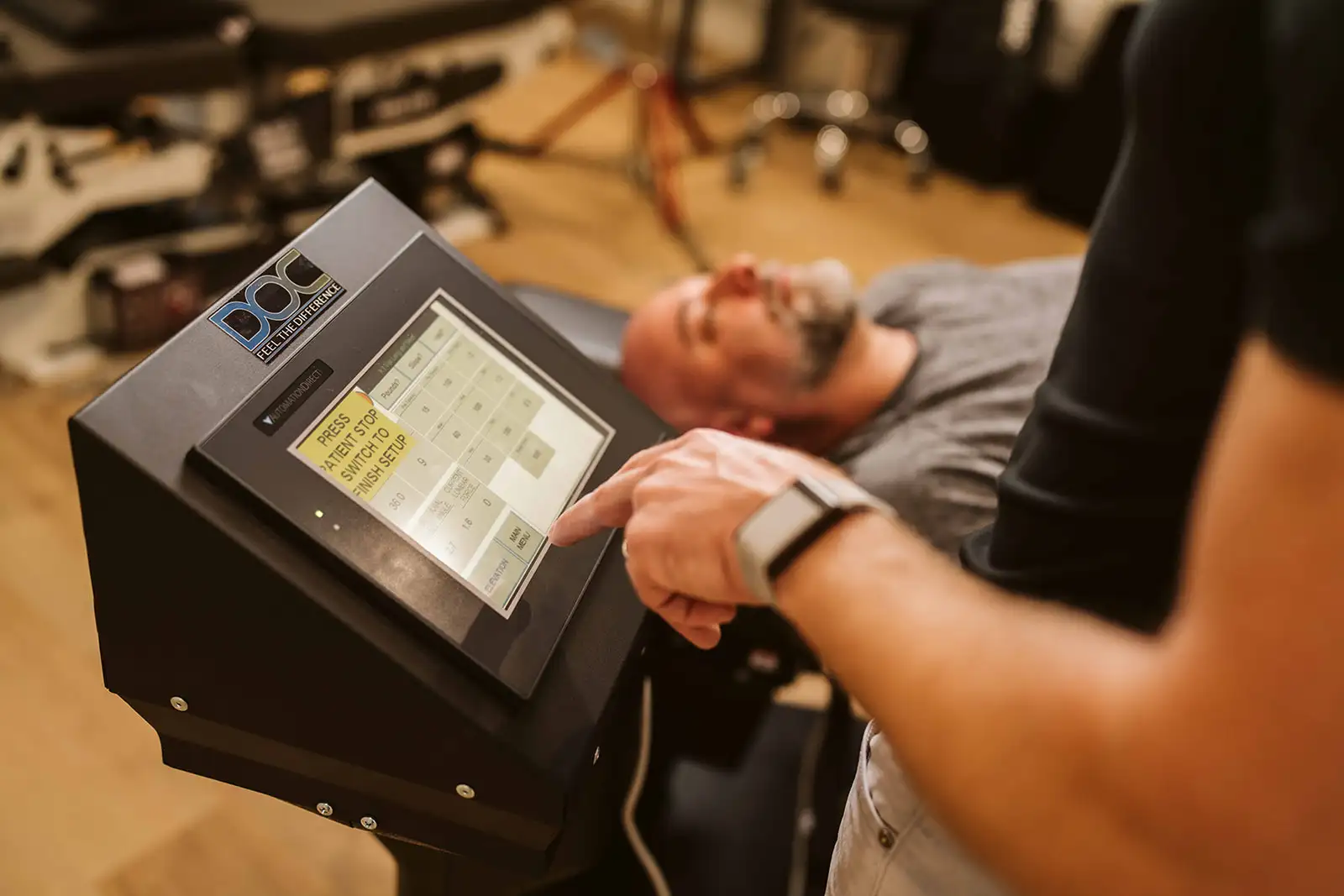
Dr. Hiebert adjusting the decompression table controls with a patient resting on the table

Non-surgical spinal decompression is a form of mechanical traction.

During treatment, a decompression table applies controlled traction to the spine.

The amount, location, pattern, and treatment settings can be adjusted and monitored based on the area being treated, your comfort, and your individualized treatment plan.

In plain English, the goal is to apply a carefully controlled pulling force rather than using a sudden movement.

That makes decompression different from a chiropractic adjustment.

Controlled Mechanical Traction

How Does Spinal Decompression Work?

During spinal decompression, you are positioned on a treatment table while controlled traction is applied.

The exact setup depends on the area being addressed, the equipment, and the treatment plan selected for you.

Research on mechanical traction suggests that certain patients, particularly some people with lumbar disc-related symptoms or nerve-related leg pain, may experience short-term improvements in pain and function.

At the same time, the research does not show that decompression is effective for every type of back pain or every patient.

That is why Summit views spinal decompression as a clinical tool, not a one-size-fits-all treatment.

Instead, Dr. Hiebert considers your symptoms, health history, examination findings, movement, function, and goals before determining whether decompression may reasonably have a role in your care.

Individual Candidacy

Who May Consider Spinal Decompression?

People often begin researching decompression because they are dealing with ongoing back discomfort or symptoms associated with a disc or irritated nerve.

At Summit, spinal decompression may enter the conversation for selected patients dealing with concerns such as:

Persistent lower back pain

Disc-related lower back pain

Bulging or herniated disc findings

Certain cases of lumbar radiculopathy or sciatica-like nerve-related leg pain

Back or leg symptoms that have not responded adequately to other conservative approaches

Difficulty with everyday movement because of a back-related problem

Dr. Hiebert monitoring a patient during a spinal decompression session at Summit Spine & Wellness
Disc-Related Concerns

Spinal Decompression for Bulging or Herniated Disc Concerns

If you have been told you have a bulging or herniated disc, it is easy to focus entirely on that one finding.

But your care should still be based on the whole picture.

How do you feel?

What movements bother you?

Are symptoms staying in your back or traveling somewhere else?

How is the problem affecting your daily life?

And does what Dr. Hiebert finds during your evaluation line up with your symptoms?

Mechanical traction has been studied in people with lumbar disc herniation, with some research reporting short-term improvements in pain or function.

Other research has found insufficient evidence to conclude that traction consistently reduces the size of a herniated disc.

The goal of decompression is not simply to change what an MRI looks like.

The more important question is whether treatment helps reduce symptoms and improves your ability to move and function.

For appropriately selected patients, decompression may be used to help reduce pain or nerve-related symptoms and improve tolerance for movement while other parts of the treatment plan address mobility, strength, and function.

If decompression is appropriate, Dr. Hiebert will explain what he believes it may realistically contribute to your care.
Nerve-Related Symptoms

Spinal Decompression for Sciatica & Leg Symptoms

People often use the word sciatica when discomfort begins in the lower back or hip and travels down the leg.

But leg symptoms can have different causes.

That distinction matters because choosing a treatment based only on the word “sciatica” can oversimplify what is happening.

Research into mechanical traction for lumbar nerve-related symptoms has produced mixed results.

Some evidence suggests traction added to other conservative care may provide short-term benefit for certain patients, but it is not universally effective.

If you are experiencing symptoms traveling into your leg, Dr. Hiebert will want to understand what you are feeling before determining whether decompression belongs in the conversation.

If you are also experiencing numbness, tingling, weakness, or other neurologic changes, tell Dr. Hiebert.

Those findings may affect what type of care or additional evaluation is appropriate.

You do not need to diagnose yourself before scheduling.

The right starting point is an evaluation.

Reassess the Situation

What If Your Back Pain Has Been Around for a While?

Persistent back pain can become frustrating because it starts affecting more than one moment of your day.

You may change the way you sit. Avoid certain exercises. Think twice about travel. Stop doing things around the house. Or spend more time thinking about your back than you would like.

If previous care has not gotten you where you want to be, that does not automatically mean spinal decompression is the next answer.

It means it may be time to look at the situation again.

Tell Dr. Hiebert what you have already tried. Tell him what helped. Tell him what did not. Tell him what you are hoping to accomplish now.

If non-surgical spinal decompression makes sense as part of that conversation, he will explain why.

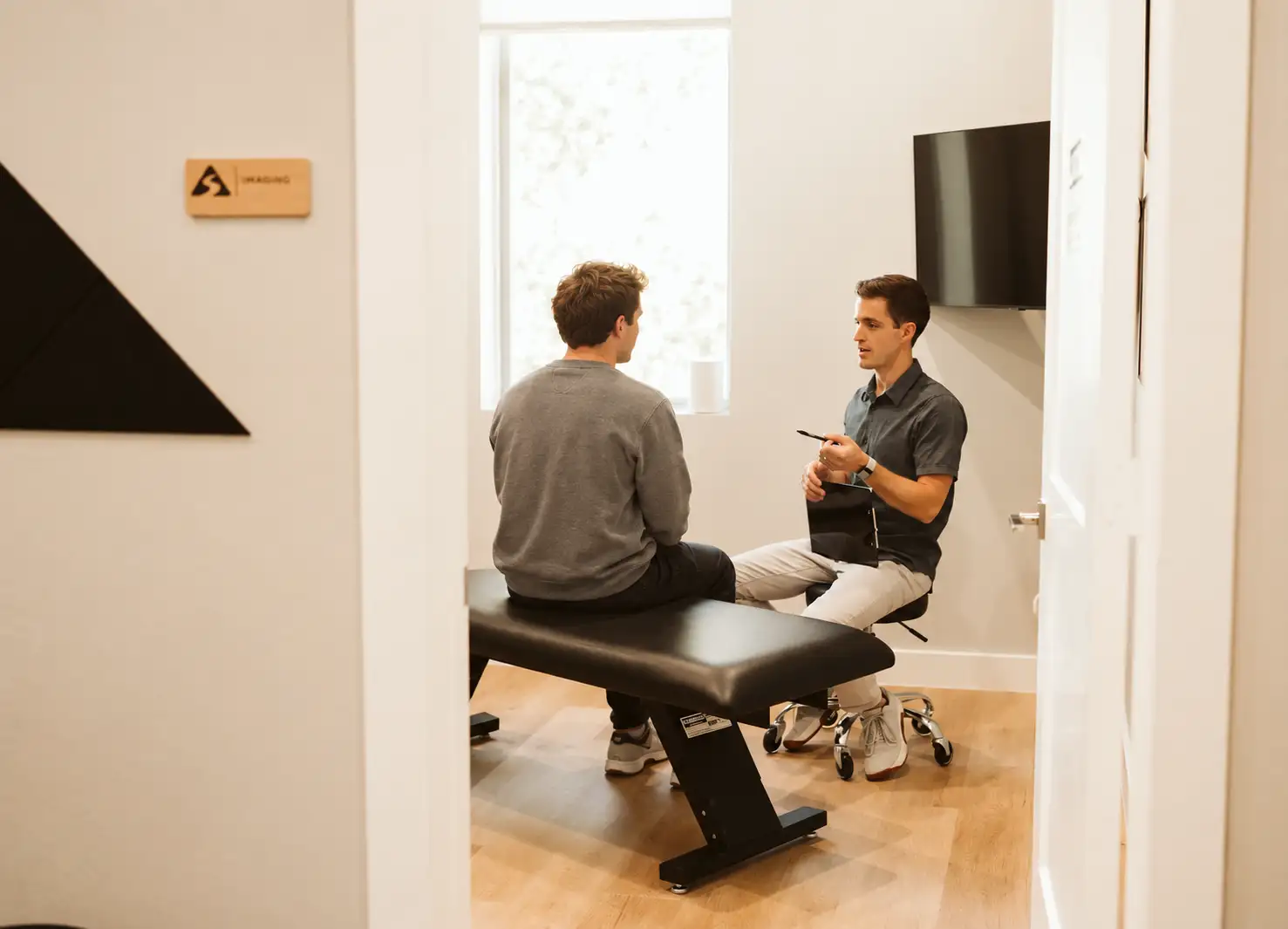
Patient discussing back pain and care goals during a clinic consultation
What to Expect

What Does a Spinal Decompression Session Feel Like?

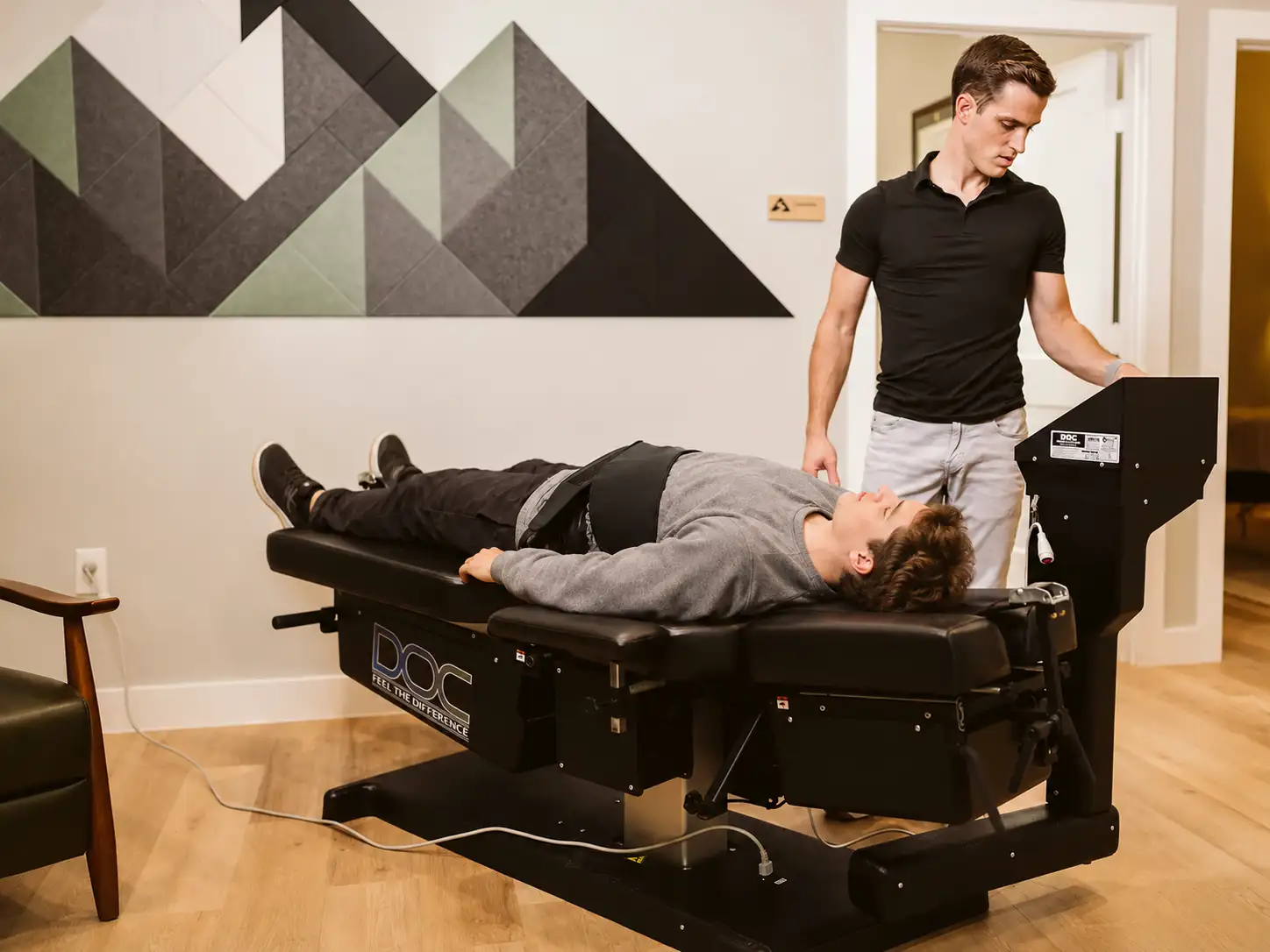
Patient receiving spinal decompression in the Summit treatment room

One of the biggest questions people have before trying decompression is simply:

What is this actually going to feel like?

Spinal decompression uses controlled traction rather than a chiropractic adjustment.

You will be positioned on the decompression table, and the treatment settings are selected according to the plan Dr. Hiebert believes is appropriate.

You should not feel like you have to silently tolerate something that makes you uncomfortable.

Tell Dr. Hiebert what you are feeling. Ask questions. If something does not feel right, say so.

Spinal Decompression Is Not Right for Everyone

This matters enough to say clearly.

Not every person with back pain, sciatica, or a disc-related concern should receive spinal decompression.

Your:

Health history

Previous injuries or procedures

Current symptoms

Examination findings

Neurologic findings

Comfort

Individual risk factors

can all affect whether decompression is appropriate.

That is why Summit does not use a:

“You have back pain, so get on the table”

approach.

Dr. Hiebert first needs to understand what is happening and whether decompression is appropriate for your situation.

If something about your situation suggests decompression is not appropriate, he will explain that.

If another Summit service makes more sense, he can discuss it with you.

If you need a different type of medical evaluation or another healthcare provider, Dr. Hiebert will explain that and help you understand the next step.

The priority is recommending care that fits your individual needs.

Connected Care

Decompression May Be One Part of the Plan

Having a spinal decompression table does not mean every patient needs a “decompression plan.”

Sometimes decompression may be one piece of a broader approach.

Depending on your individual needs, Dr. Hiebert may also discuss:

Soft Tissue Therapy

Hands-on care focused on muscles and surrounding tissues that may be contributing to how you move and feel.

Explore Soft Tissue Therapy

The goal is not to pile services onto your treatment plan. It is to determine which pieces actually make sense for you.

You can also Explore All Summit Services to see the broader range of options available when appropriate.

Care Beyond the Table

Why Movement Still Matters

A decompression table only sees you while you are in the clinic.

Your real life happens everywhere else.

Your back still has to handle: Work. Driving. Exercise. Travel. Golf. Yard work. Picking things up. Sitting through meetings. Playing with your kids or grandkids. And all of the normal things you want to be able to do without constantly thinking about your back.

That is why Summit’s approach does not stop at passive care.

When appropriate, movement, exercise, and practical recommendations may become part of helping you work toward your goals.

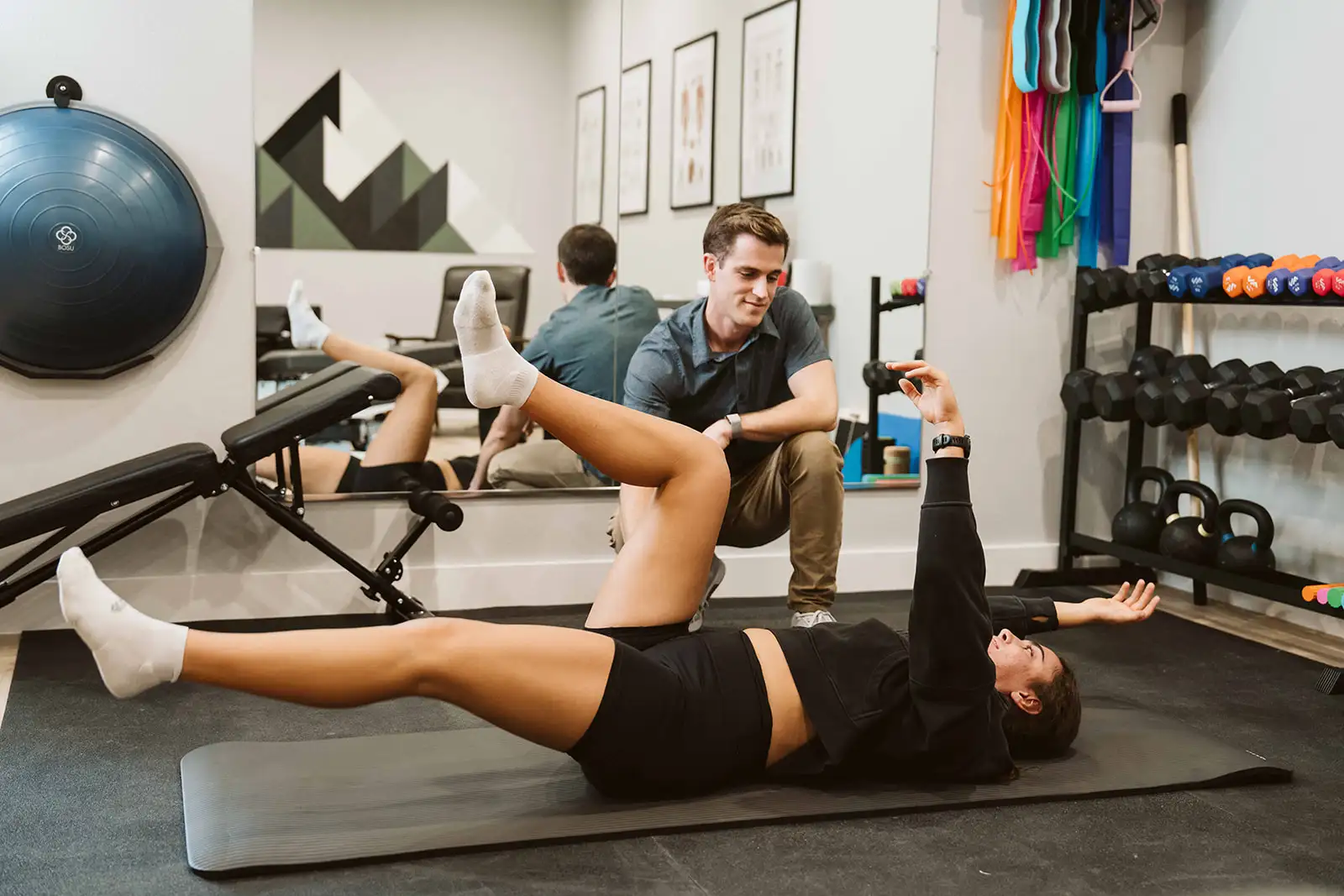
Dr. Hiebert guiding a patient through a core strengthening exercise
Individual Recommendations

No Automatic Number of Decompression Sessions

You may see spinal decompression programs advertised elsewhere as preset packages with a fixed number of visits.

That is not how Summit approaches care.

Dr. Hiebert recommends the amount and frequency of care he believes is appropriate for the individual.

Not more. Not less.

How often you are seen and whether decompression continues should depend on:

Your clinical situation

Your goals

The plan Dr. Hiebert recommends

How you respond

Whether meaningful progress is occurring

You should understand why care is being recommended.

You should be able to ask questions.

And you should not feel pressured into a long-term plan simply because you asked about spinal decompression.

Learn About Our Approach
Clear Answers

Spinal Decompression Questions

How does spinal decompression work?

Spinal decompression uses controlled mechanical traction applied through a treatment table. Treatment settings can be adjusted based on the area being treated, your comfort, and the individualized plan. It is different from a chiropractic adjustment and is not automatically appropriate for everyone.

Does spinal decompression hurt?

The experience varies depending on the individual and treatment setup. Tell Dr. Hiebert what you are feeling throughout care. If something is uncomfortable or you have concerns, speak up so the situation can be reassessed.

Who may be a candidate for spinal decompression?

Certain people with persistent back pain, disc-related concerns, or symptoms traveling into the leg may discuss decompression as an option. Candidacy depends on an individual evaluation rather than a diagnosis, imaging finding, or symptom alone.

Can spinal decompression help a bulging or herniated disc?

Mechanical traction has been studied in people with lumbar disc herniation, but the research is mixed. It does not support promising that decompression will “fix,” reverse, or permanently correct every herniated or bulging disc. For selected patients, the more realistic goal is improving symptoms and function.

Can spinal decompression be used for sciatica?

It may be considered for selected patients with certain nerve-related leg symptoms. However, sciatica-like symptoms can have different causes. Evaluation is important before deciding whether traction is appropriate. Research suggests possible short-term benefit for some patients, but results are not universal.

How many spinal decompression sessions will I need?

There is no preset number that applies to everyone at Summit Spine & Wellness. Recommendations depend on your individual situation, response to care, and whether the treatment continues to have a clear purpose.

Is spinal decompression an alternative to surgery?

Summit does not present spinal decompression as a guaranteed substitute for surgery. Whether conservative care, further testing, specialist evaluation, or another medical option is appropriate depends on the individual situation.

Does an MRI showing a disc problem mean I need decompression?

No. Imaging is one part of the clinical picture. Your symptoms, examination findings, function, health history, and goals also matter when determining whether decompression may be appropriate.

What if Dr. Hiebert does not think decompression is right for me?

He will tell you. Another Summit service may be more appropriate, or Dr. Hiebert may recommend evaluation from another healthcare provider. The goal is the right next step, not getting everyone onto the decompression table.

The goal is the right next step, not getting everyone onto the decompression table.

Local, Personalized Care

Spinal Decompression in Colleyville, Texas

Summit Spine & Wellness provides spinal decompression therapy at our Colleyville office:

If you are dealing with persistent back pain, a disc-related concern, sciatica-like symptoms, or simply want to understand whether spinal decompression may be appropriate for you, start with a conversation.

You do not need to choose your own treatment before coming in.

Summit Spine & Wellness

6416 Colleyville Blvd., Unit 108
Colleyville, TX 76034

(682) 223-1308Get Directions

Start With Clarity

Not Sure If Spinal Decompression Makes Sense for You?

Tell Dr. Hiebert what is going on, how it is affecting your daily life, what you have already tried, and what you want to get back to doing. He’ll evaluate whether spinal decompression, chiropractic care, rehabilitation, or another approach may make sense.

No pressure. No preset plan. Decompression only when it fits.

6416 Colleyville Blvd., Unit 108 · Colleyville, TX 76034