
$69 New Patient OfferView Offer
In-House Digital Imaging • When Appropriate

Digital X-Ray & Diagnostic Imaging in Colleyville, TX

Sometimes an examination gives Dr. Hiebert the information he needs. Sometimes imaging can help clarify the next step.

Summit Spine & Wellness offers in-house digital X-rays when clinically appropriate, giving Dr. Hiebert additional information to help guide care, further imaging, referral, or another next step.

  • In-house digital X-ray when appropriate
  • Not every patient needs imaging
  • Used to help inform the next step

Imaging should have a reason.

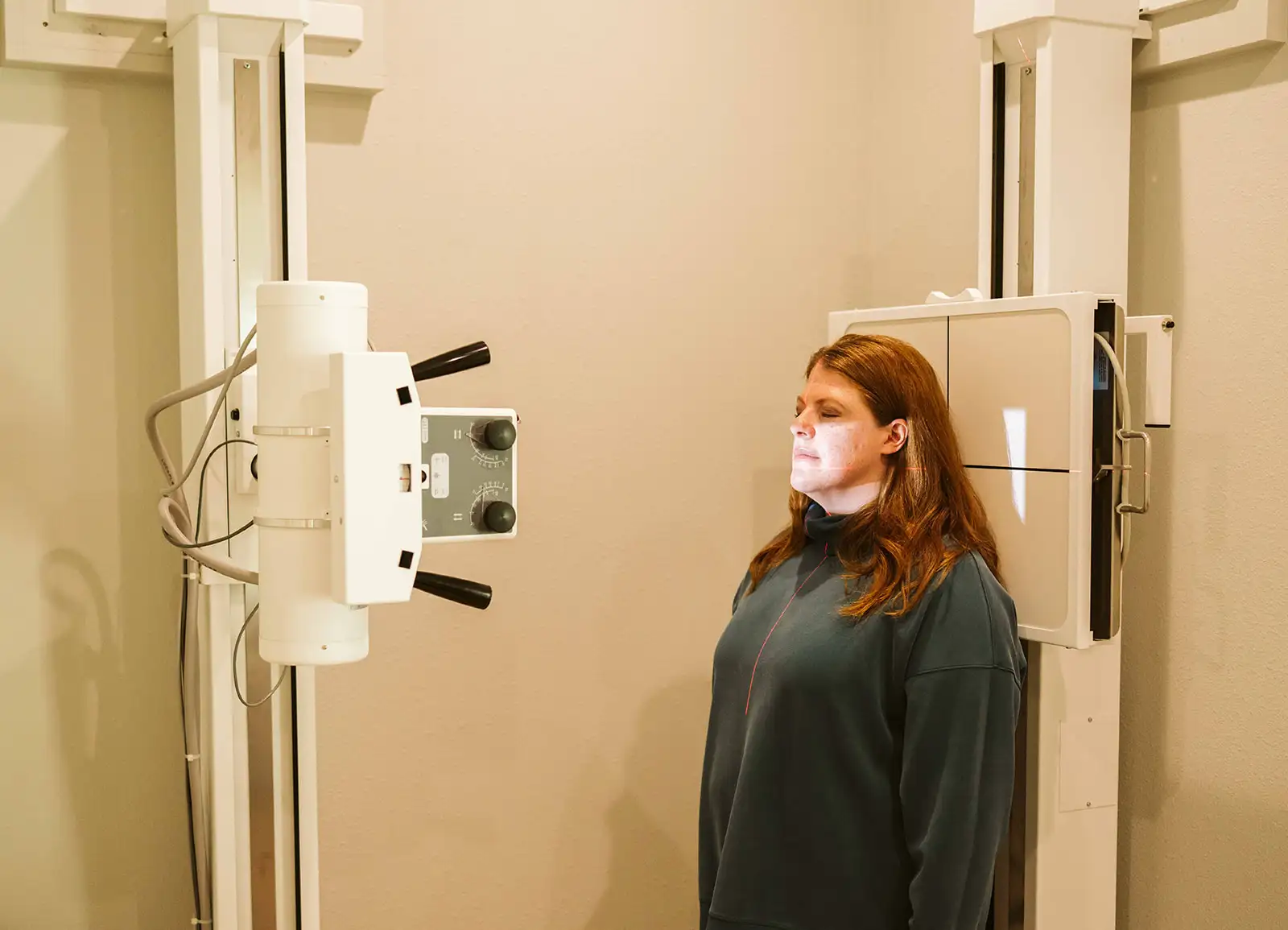
A patient positioned for digital X-ray imaging at Summit Spine & Wellness

Imaging With a Purpose

Only When It Adds Useful Information

More Information When It Matters

More Information When More Information Is Needed

Having digital X-ray available in the office does not mean every person who visits Summit automatically gets imaging.

The purpose of an X-ray is to provide useful information when that information may affect your care.

Dr. Hiebert looks at the bigger picture.

What brought you in?

What are you experiencing?

What does your examination show?

Have you had a recent injury?

Do you already have relevant imaging?

Would an X-ray help answer an important question before treatment begins?

Those considerations matter more than simply having an X-ray machine available.

More imaging is not automatically better care.

The goal is to use imaging when it can help Dr. Hiebert make a better clinical decision.

Dr. Hiebert talking with a patient in an examination room
Imaging Decision Process

How Does Summit Decide Whether You Need an X-Ray?

You do not need to decide whether you need imaging before scheduling. That decision is part of the evaluation.

01

Start With Your History & Symptoms

Dr. Hiebert first wants to understand what is going on.

That may include:

What brought you to Summit

Where you are experiencing pain or discomfort

When the problem started

Whether there was an injury or trauma

Previous injuries or surgeries

Numbness, tingling, weakness, or other neurologic symptoms

What movements or activities are difficult

Previous treatment

Relevant health history

Existing X-rays, MRI, CT, or other imaging

What you want to get back to doing

The goal is to understand the clinical question before deciding whether an image could help answer it.

02

Perform an Appropriate Physical Examination

Dr. Hiebert will perform an examination based on your history and symptoms.

Depending on your situation, that may include evaluating:

Movement and mobility

Range of motion

Strength

Sensation

Reflexes or other neurologic findings when appropriate

Areas of tenderness or sensitivity

Movements or positions that reproduce symptoms

Functional movements related to your concern

Sometimes the history and examination provide enough information to determine the next step.

Sometimes imaging may add useful information.

03

Review Existing Imaging

If you already have relevant X-rays, MRI, CT scans, or radiology reports, bring them when possible.

Summit encourages patients to provide relevant imaging from approximately the previous 12 months when available.

Depending on your situation, those images and reports may provide useful information and may help avoid unnecessary repeat imaging.

If the imaging is older or unrelated to your current concern, Dr. Hiebert can explain whether additional imaging may be useful.

04

Decide Whether New Imaging Could Change the Recommendation

An X-ray should answer a useful clinical question.

Dr. Hiebert may consider whether imaging could help:

Evaluate structural findings

Identify information that could affect treatment

Determine whether chiropractic care appears appropriate

Decide whether more advanced imaging should be considered

Determine whether referral to another healthcare provider makes sense

Clarify the next step before treatment begins

If an X-ray is unlikely to provide useful information, there may be no reason to take one.

05

Review the Findings & Decide What Comes Next

If X-rays are obtained, the goal is not simply to show you an image.

Dr. Hiebert will consider the findings alongside your history, symptoms, examination, movement, and goals.

Chiropractic care

Rehabilitation or corrective exercise

Additional imaging

Referral to another healthcare provider

Another appropriate direction

The image is information. The patient is the bigger picture.

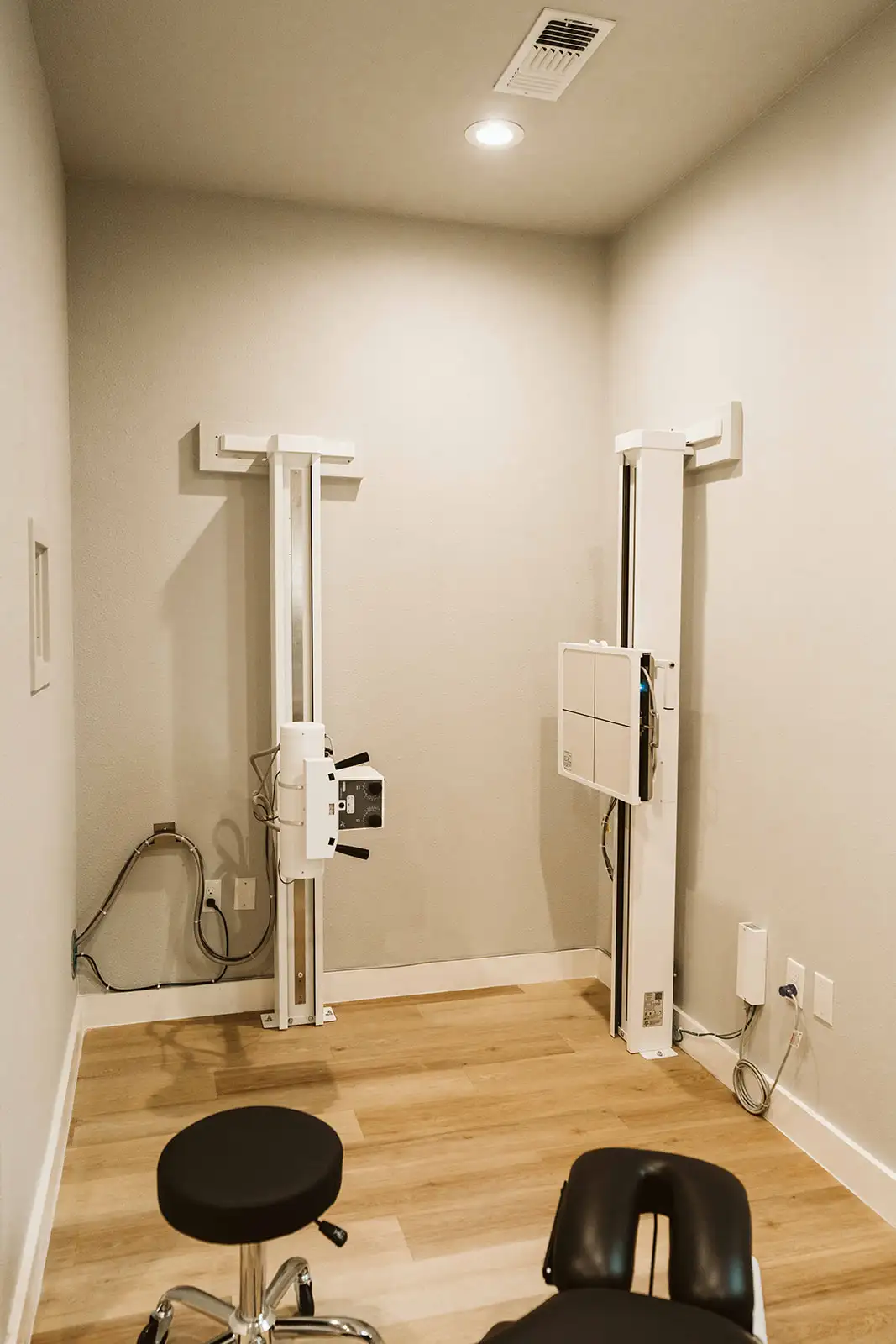
Digital X-ray equipment in the Summit Spine & Wellness imaging room
Imaging Inside the Clinic

Why Summit Offers Digital X-Ray In-House

When X-rays are appropriate, having digital imaging available inside Summit Spine & Wellness can make the process more straightforward.

Rather than automatically sending you somewhere else for basic X-rays, appropriate imaging can be obtained in the clinic and considered as part of your overall evaluation.

That allows Dr. Hiebert to look at the X-ray findings alongside:

Your health history

Your current symptoms

Your examination

How you are moving

Previous injuries

Existing records or imaging

What you are hoping to improve

An X-ray is one piece of information.

It should not replace the conversation or examination.

Will I Need X-Rays Before Chiropractic Care?

Maybe.

When X-rays are clinically appropriate, Summit generally obtains the needed imaging before beginning chiropractic adjustments if relevant recent imaging is not already available.

But that does not mean every patient will be X-rayed.

The decision may depend on:

Your age

Health history

Examination findings

Current symptoms

Previous injury or trauma

The type of care being considered

Whether you already have recent relevant imaging

Whether the findings could change the recommended next step

Dr. Hiebert does not want to take X-rays simply because you scheduled a chiropractic appointment.

The imaging should answer a useful clinical question.

X-Rays Are Not Automatic for Every New Patient

This is worth saying clearly.

Not every new patient at Summit Spine & Wellness receives X-rays.

Dr. Hiebert considers the individual situation before deciding whether imaging is appropriate.

For patients under age 16, X-rays are generally not obtained unless there has been significant trauma or other clinical findings make imaging appropriate.

For adults, age alone does not determine whether imaging is needed.

Your history, examination findings, symptoms, previous imaging, and clinical presentation all matter.

If you already have relevant imaging from approximately the previous 12 months, bring it with you.

Depending on the situation, those images and reports may provide the information Dr. Hiebert needs and may help avoid unnecessary repeat imaging.

If your existing imaging is older or does not relate to your current concern, Dr. Hiebert can explain whether new imaging may still be useful.

New Patient Information
What Imaging Can Add

What Can an X-Ray Help Dr. Hiebert Evaluate?

Digital X-rays can provide information about bony anatomy and structural findings that may not be available from the physical examination alone.

Depending on your situation, imaging may help Dr. Hiebert:

Evaluate structural findings

Identify information that may affect treatment

Consider whether chiropractic care appears appropriate

Determine whether additional evaluation may be needed

Decide whether another type of imaging should be considered

Determine whether referral to another healthcare provider makes sense

But an X-ray should not be treated as the entire answer.

What appears on an image still needs to be considered alongside how you feel, what happened, what Dr. Hiebert finds during the examination, and what you are trying to accomplish.

The image is information. The patient is the bigger picture.

Dr. Hiebert listening to a patient during a consultation

Already Have X-Rays, MRI, or CT Imaging?

Bring them.

Summit encourages patients to provide relevant previous imaging and reports whenever possible.

That may include:

X-rays

MRI images

MRI reports

CT images

CT reports

Radiology reports

Imaging from an emergency room

Imaging from urgent care

Imaging from another chiropractor or healthcare provider

Previous imaging can become part of your evaluation.

If the information is recent and relevant, it may help Dr. Hiebert understand your situation without unnecessarily repeating imaging.

If additional imaging is still appropriate, he can explain why.

Who Reviews Your X-Rays?

Dr. Hiebert reviews X-rays obtained through Summit Spine & Wellness and considers the findings as part of your overall evaluation.

For certain cases, an outside radiologist may also review the imaging when additional interpretation is appropriate.

The goal is not simply to take an X-ray and show you a picture.

The goal is to determine whether the findings affect:

Your treatment options

Whether chiropractic care appears appropriate

Whether additional imaging is needed

Whether another healthcare provider should become involved

You should have an opportunity to ask questions about what Dr. Hiebert sees and how the information relates to the recommended next step.

When Another Tool Is Better

What If an X-Ray Is Not Enough?

Digital X-rays are useful for certain questions.

They are not the right tool for every situation.

If Dr. Hiebert believes more advanced imaging such as an MRI or CT scan is clinically appropriate, Summit Spine & Wellness can refer you to an appropriate outside imaging facility and help coordinate that process.

Advanced imaging may be considered based on factors such as:

Your history

Examination findings

Current symptoms

Existing imaging

How the condition is progressing

Concern that something requires further evaluation

Summit does not perform MRI or CT imaging in-house.

If another type of imaging is more appropriate, Dr. Hiebert can explain why and help you understand what happens next.

From Information to Action

Imaging Should Help Guide the Next Step

Getting an X-ray does not automatically mean you need a chiropractic adjustment. Imaging may help guide several possible next steps.

Chiropractic Care

If your history, examination, and imaging support moving forward with chiropractic care, Dr. Hiebert can explain what he recommends and why.

Explore Chiropractic Adjustments

Rehabilitation & Movement

If movement, strength, mobility, or function need attention, rehabilitation or corrective exercise may become part of the plan.

Explore Active Rehabilitation

Additional Imaging

If the X-ray does not provide enough information for the question being evaluated, MRI, CT, or another study may be considered.

Referral

If Dr. Hiebert believes another healthcare professional should evaluate something first, he will tell you.

The goal is not to make every X-ray lead back to chiropractic.

The goal is to use the information to make a better decision.

A one-on-one care consultation at Summit Spine & Wellness
Imaging After Injury

Digital X-Ray After an Auto Accident

Imaging can also play an important role when evaluating selected patients after an auto accident or personal injury.

Summit has in-house digital X-ray available when Dr. Hiebert determines imaging is appropriate.

That does not mean every person involved in an accident automatically needs X-rays.

The decision should still be based on the accident history, symptoms, examination findings, existing imaging, and the clinical question being evaluated.

For personal injury cases, outside radiology review may also be used when appropriate.

If MRI, CT, or another advanced study is needed, Summit can help coordinate the referral.

Patients who have already received imaging through an emergency room, hospital, urgent care, or another provider should bring those images and reports whenever possible.

Learn About Auto Accident & Personal Injury Care

What About Radiation?

X-ray imaging uses ionizing radiation.

That is another reason Summit does not take X-rays simply because the equipment is available.

Dr. Hiebert considers whether the expected clinical value of the imaging justifies the radiation exposure for the individual situation before recommending it.

When X-rays are performed, Summit follows applicable imaging and radiation safety procedures.

If you have questions or concerns about X-rays, ask before imaging is performed.

If you are pregnant or believe you may be pregnant, make sure the Summit team knows before any X-ray examination.

The goal is thoughtful use of imaging, not unnecessary imaging.

Clear Explanations

Your X-Ray Is Part of the Conversation

Healthcare can become confusing when someone shows you an image full of unfamiliar shapes and starts using terminology you have never heard before.

That is not how Summit wants this process to feel.

If X-rays are taken, Dr. Hiebert will use the imaging as part of the broader conversation about what he found and what he recommends.

Ask questions.

If something does not make sense, say so.

You should understand:

Why the X-ray was recommended

What information it provided

Whether the findings affect treatment

Whether additional imaging is needed

What Dr. Hiebert recommends next

Good imaging should provide more clarity, not more confusion.

A clinician reviewing cervical X-ray images with a patient
Clear Answers

Digital X-Ray & Diagnostic Imaging Questions

Will I need X-rays at my first chiropractic visit?

Possibly. X-rays may be considered when they are clinically appropriate and relevant recent imaging is not already available. They are not automatic for every patient.

Does every Summit patient get X-rays?

No. The decision is based on your individual history, examination findings, age, current presentation, existing imaging, and whether the information could affect care.

Why might Dr. Hiebert recommend an X-ray?

An X-ray may provide additional information about bony anatomy or structural findings that could affect treatment decisions. It may also help determine whether chiropractic care, additional imaging, referral, or another next step is appropriate.

What if I already have recent X-rays?

Bring them. Relevant recent X-rays and reports may be reviewed as part of your evaluation and may help avoid unnecessary repeat imaging when appropriate.

Can I bring an MRI or CT scan from another provider?

Yes. Bring relevant MRI or CT images and reports so Dr. Hiebert can consider them as part of your evaluation.

Does Summit perform MRI or CT scans?

No. Summit provides in-house digital X-ray. When MRI, CT, or another advanced imaging study is clinically appropriate, Dr. Hiebert can refer you to an outside imaging facility and help coordinate the process.

Who reviews my X-rays?

Dr. Hiebert reviews imaging obtained through Summit and considers the findings as part of your overall evaluation. For certain cases, an outside radiologist may also review the imaging when additional interpretation is appropriate.

Does an X-ray automatically mean I need chiropractic treatment?

No. An X-ray may support several different decisions, including chiropractic care, rehabilitation, additional imaging, referral, or another direction.

Are children automatically X-rayed?

No. Patients under age 16 are generally not X-rayed unless significant trauma or other clinical findings make imaging appropriate.

Can I schedule an X-ray without an evaluation?

Summit does not treat X-rays as an on-demand wellness service. Imaging decisions are based on the individual clinical situation. Start with an evaluation so Dr. Hiebert can determine whether imaging is appropriate.

Local Diagnostic Imaging

Digital Chiropractic X-Rays in Colleyville, Texas

Summit Spine & Wellness offers in-house digital X-ray at our Colleyville clinic:

If you are not sure whether you need X-rays, you do not have to decide that yourself.

Tell Dr. Hiebert what is going on.

Bring relevant imaging you already have.

He can evaluate your situation and determine whether an X-ray, another type of imaging, chiropractic care, referral, or another next step makes sense.

Start With Clarity

Not Sure If You Need an X-Ray?

You do not need to make that decision yourself. Tell Dr. Hiebert what is going on and bring any relevant imaging you already have. He’ll determine whether an X-ray or other imaging may provide useful information and explain the next step.

Imaging when appropriate. No automatic X-rays. Clear next steps.

6416 Colleyville Blvd., Unit 108 · Colleyville, TX 76034