$69 New Patient OfferView Offer
TARGETED MUSCLE & MOVEMENT SUPPORT

Dry Needling in Colleyville, TX

Muscle tension, trigger points and stubborn areas of tightness can interfere with movement, exercise and everyday activity.

At Summit Spine & Wellness, dry needling may be used as a targeted treatment option when Dr. Hiebert determines it is appropriate for what you are experiencing and what you want to get back to doing.

  • Focused on specific muscles and trigger points
  • Used when clinically appropriate
  • May complement chiropractic and rehabilitation
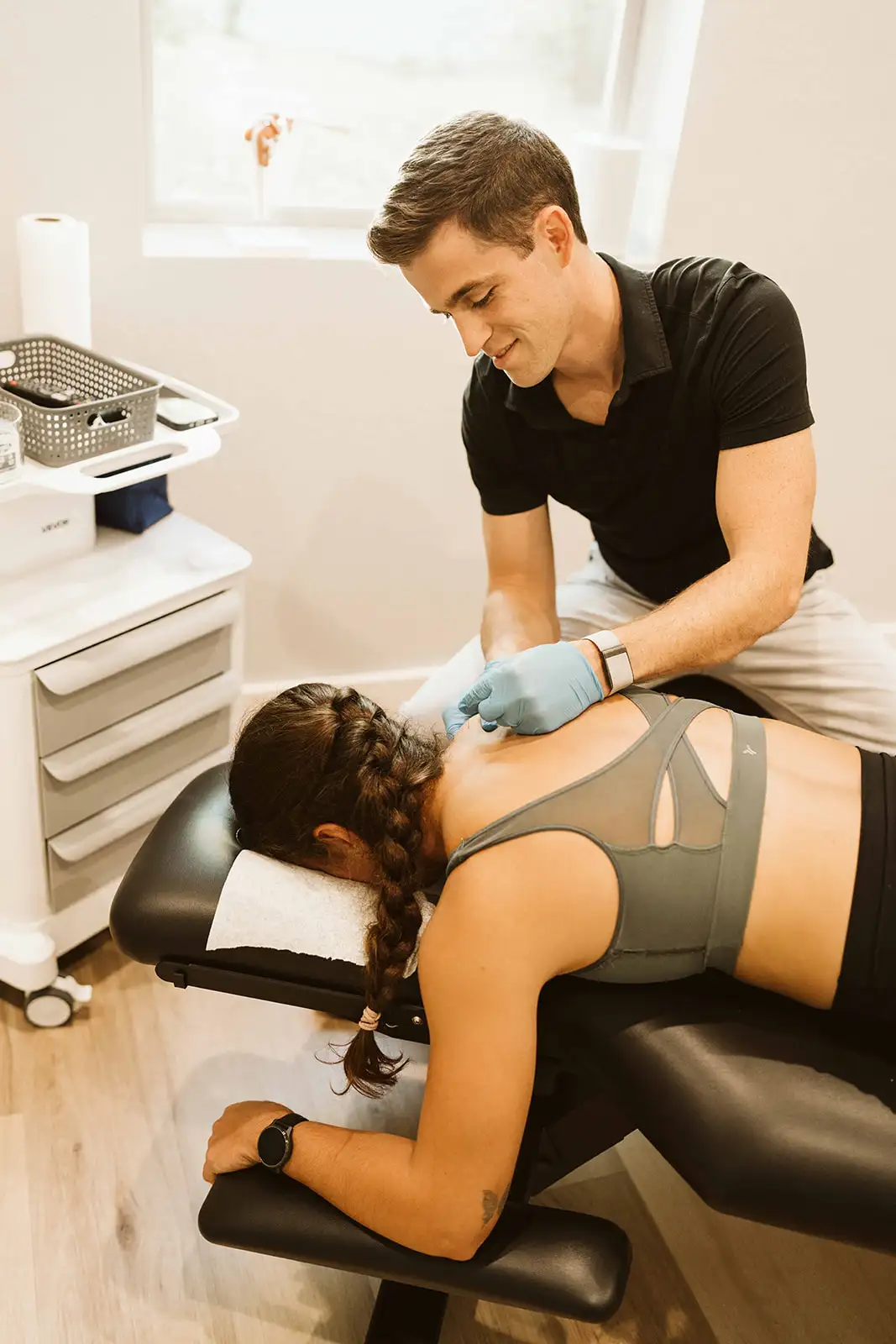
Dr. Hiebert performing dry needling on a patient's upper back
START WITH THE PROBLEM

You Don't Need to Decide If You Need Dry Needling

You do not need to diagnose yourself or decide on dry needling before scheduling.

Start by telling Dr. Hiebert what is bothering you, where you feel tight or restricted, how it affects your movement or activity, and what you want to get back to doing.

Your evaluation helps determine whether dry needling makes sense or whether another approach may be a better fit.

Dry needling is one option at Summit. It is not the automatic answer for every muscle or movement concern.

Where are you feeling the problem?

When do you notice it?

What movements make it better or worse?

What have you already tried?

How is it affecting work, workouts, sports, sleep, travel, or everyday life?

And what are you trying to get back to doing?

Dr. Hiebert providing dry needling treatment at Summit Spine & Wellness
DRY NEEDLING EXPLAINED

What Is Dry Needling?

Dry needling uses thin, sterile needles placed into selected muscles and soft-tissue areas.

Dr. Hiebert may consider the technique when he identifies tight or sensitive muscle tissue, trigger points or other findings that may be contributing to how you feel or move.

The goal is not to simply place needles wherever something hurts.

Dry needling is used selectively based on your evaluation, symptoms, movement and goals.

Depending on your situation, it may be used on its own during a visit or alongside other chiropractic, soft-tissue or rehabilitation care.

What area is being addressed

Why dry needling is being considered

What you may experience

How it connects to what you want to improve

What other options may be available

The treatment should fit the goal.

WHY IT MAY BE USED

Why We Offer Dry Needling

Muscles can become tight, overworked or sensitive for many reasons.

That may happen after an injury, repetitive activity, exercise, long hours at a desk, physically demanding work or an increase in activity.

When appropriate, dry needling gives Dr. Hiebert another targeted option for working with specific muscle tissue.

It may be used alongside chiropractic care, rehabilitation, corrective exercise or soft-tissue work when that combination makes sense.

The goal is not to use every treatment available.

It is to choose the options that fit the person in front of us.

Symptoms

Examination findings

Goals

Preferences

Comfort

Individual risk factors

Broader care plan

MUSCLE & MOVEMENT

Muscle Tension & Trigger Points

A muscle does not have to be seriously injured to feel tight, sensitive or overworked.

Muscle tension can develop from:

  • Strength training
  • Running or sports
  • Desk work
  • Repetitive movement
  • Physical jobs
  • Long drives or travel
  • Previous sprains or strains
  • Returning to activity
  • Increased training or workload

Some people also develop localized areas within muscle tissue that feel especially tight or tender. These are commonly called trigger points.

When those findings appear relevant to your symptoms or movement, dry needling may be one option Dr. Hiebert considers.

That does not mean every tight muscle needs to be needled.

Reduce pain or sensitivity

Improve tolerance for movement

Make certain activities more comfortable

Create an opportunity to progress with active care

SHOULDER & UPPER BODY

Dry Needling for Shoulder & Upper-Body Concerns

Shoulder and upper-back discomfort can show up during lifting, reaching overhead, computer work, golf, sports, sleep, turning your head or everyday movement.

When muscle tension or sensitive trigger points appear to be part of the picture, dry needling may be one option worth discussing.

Dry needling has been studied for neck and shoulder-related myofascial pain, with research showing short-term pain improvement in some patients.

Results are not uniform.

That is why your symptoms, examination findings, goals, and response to care matter when deciding whether dry needling belongs in your plan.

The important part is determining whether that information actually applies to you.
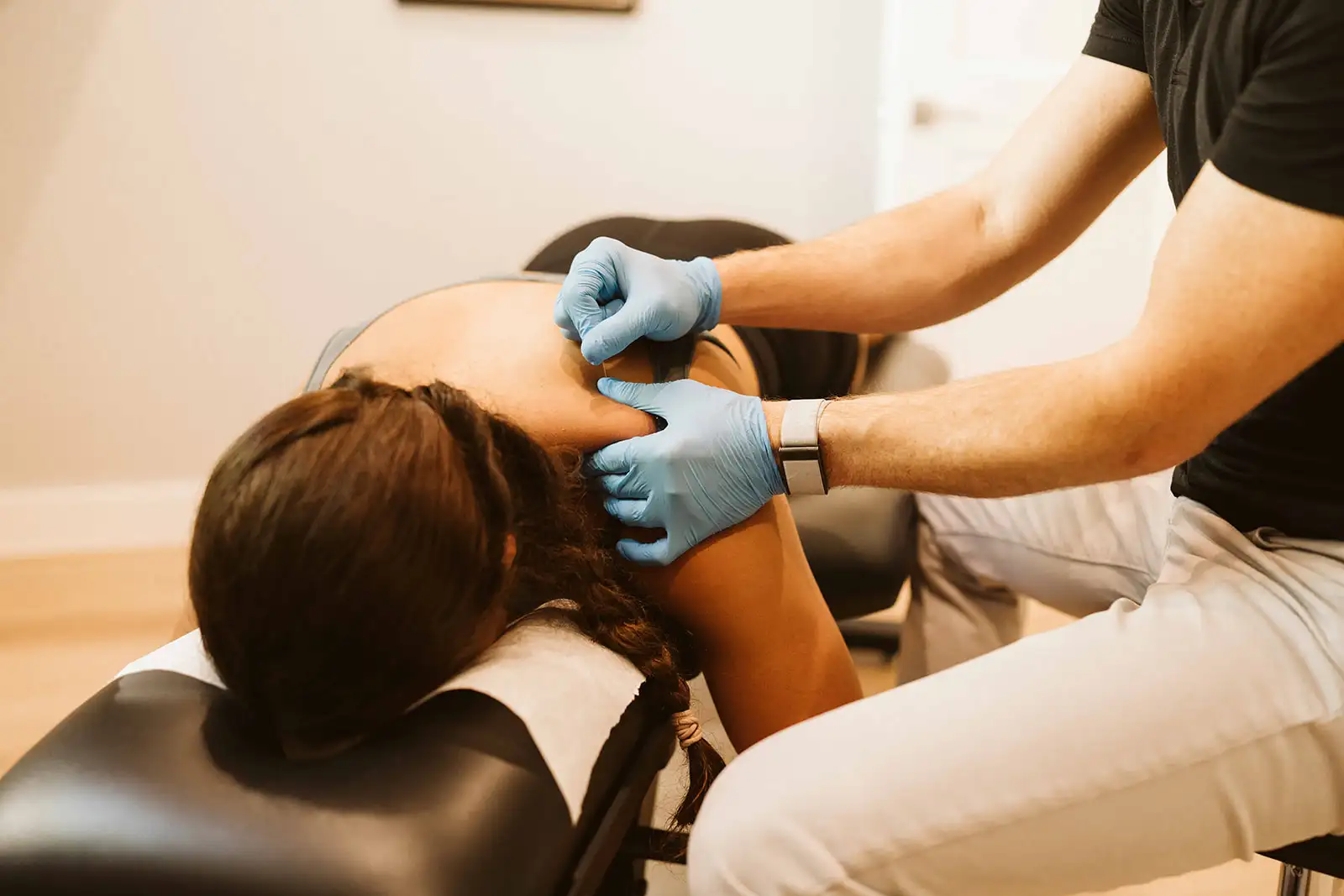
Close-up of dry needling treatment near a patient's shoulder
KNEE & LOWER BODY

Dry Needling for Knee & Lower-Body Concerns

Muscle-related problems around the hips, thighs, knees, calves, and other areas of the lower body can interfere with:

  • Running
  • Lifting
  • Sports
  • Stairs
  • Walking
  • Training
  • Everyday activity

Dry needling may be considered when muscle tension or trigger-point-related symptoms appear to be contributing to the problem.

But knee or lower-body discomfort can have many different causes.

That is why the goal is not:

“Your knee hurts, so let's needle it.”

The goal is to understand what is happening first.

If dry needling appears appropriate, it can then be considered alongside the rest of your care.

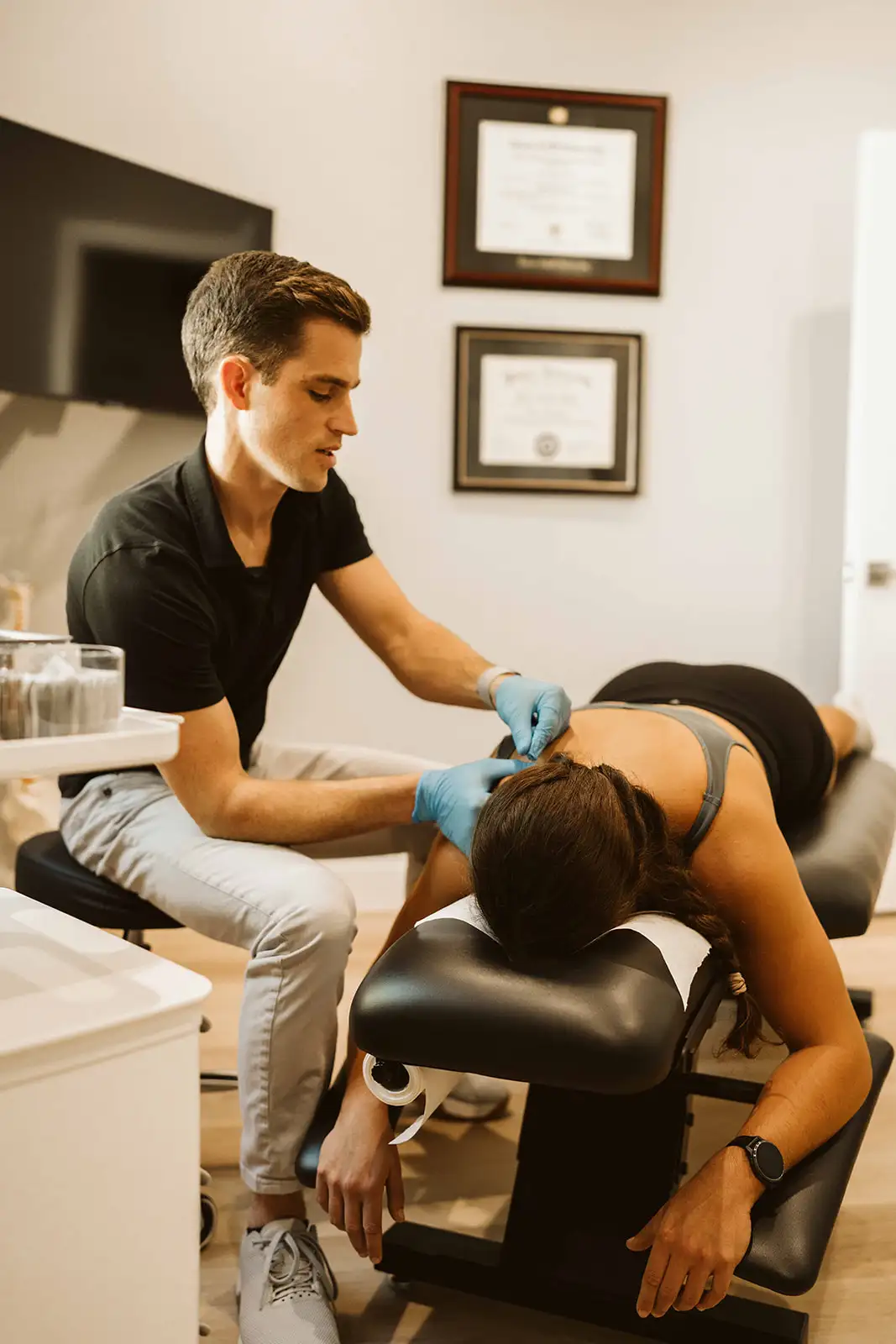
Dr. Hiebert treating the upper-back and neck area with dry needling
COMMON CONCERNS

Dry Needling for Neck Tension & Headache-Related Concerns

Muscle tension through the neck, shoulders and upper back can sometimes be part of a broader headache or movement-related picture.

When Dr. Hiebert identifies relevant muscle tension or trigger points during your evaluation, dry needling may be one option considered as part of care.

That does not mean every headache should be treated with dry needling.

Your history, examination findings and overall presentation determine whether it makes sense.

If another type of evaluation or care is more appropriate, Dr. Hiebert will explain that.

WHAT TO EXPECT

What Does Dry Needling Feel Like?

People experience dry needling differently.

You may feel:

  • A brief pinch as the needle enters
  • Pressure
  • A muscle twitch
  • Temporary sensitivity
  • A dull or aching sensation
  • Mild soreness afterward

Some areas may feel more sensitive than others.

Your comfort matters throughout the session.

If something feels too intense or uncomfortable, tell Dr. Hiebert.

The goal is not to see how much discomfort you can tolerate. It is to use the technique appropriately while keeping you informed about what is happening.

YOUR COMFORT MATTERS

Nervous About Needles? Tell Us.

Being nervous about needles does not make you a difficult patient.

And it does not mean you need to avoid asking whether dry needling could be useful.

Start with the conversation.

We can explain:

What the treatment involves

Why it is being considered

What you may feel

Which area would be treated

What other options may exist

Then you can ask questions and decide whether you are comfortable moving forward.

If dry needling is not right for you, or you simply are not comfortable with it, other options may be available.

That is part of personalized care.

No pressure.

TWO DIFFERENT APPROACHES

Is Dry Needling the Same as Acupuncture?

No.

Dry needling and acupuncture both use thin needles, but they are different practices with different clinical approaches.

At Summit, dry needling is used as a musculoskeletal technique focused on selected muscles, trigger points and movement-related findings.

Acupuncture is a separate healthcare practice with its own training, philosophy and clinical framework.

The equipment may look similar, but the reason the needles are being used and the approach behind the treatment are different.

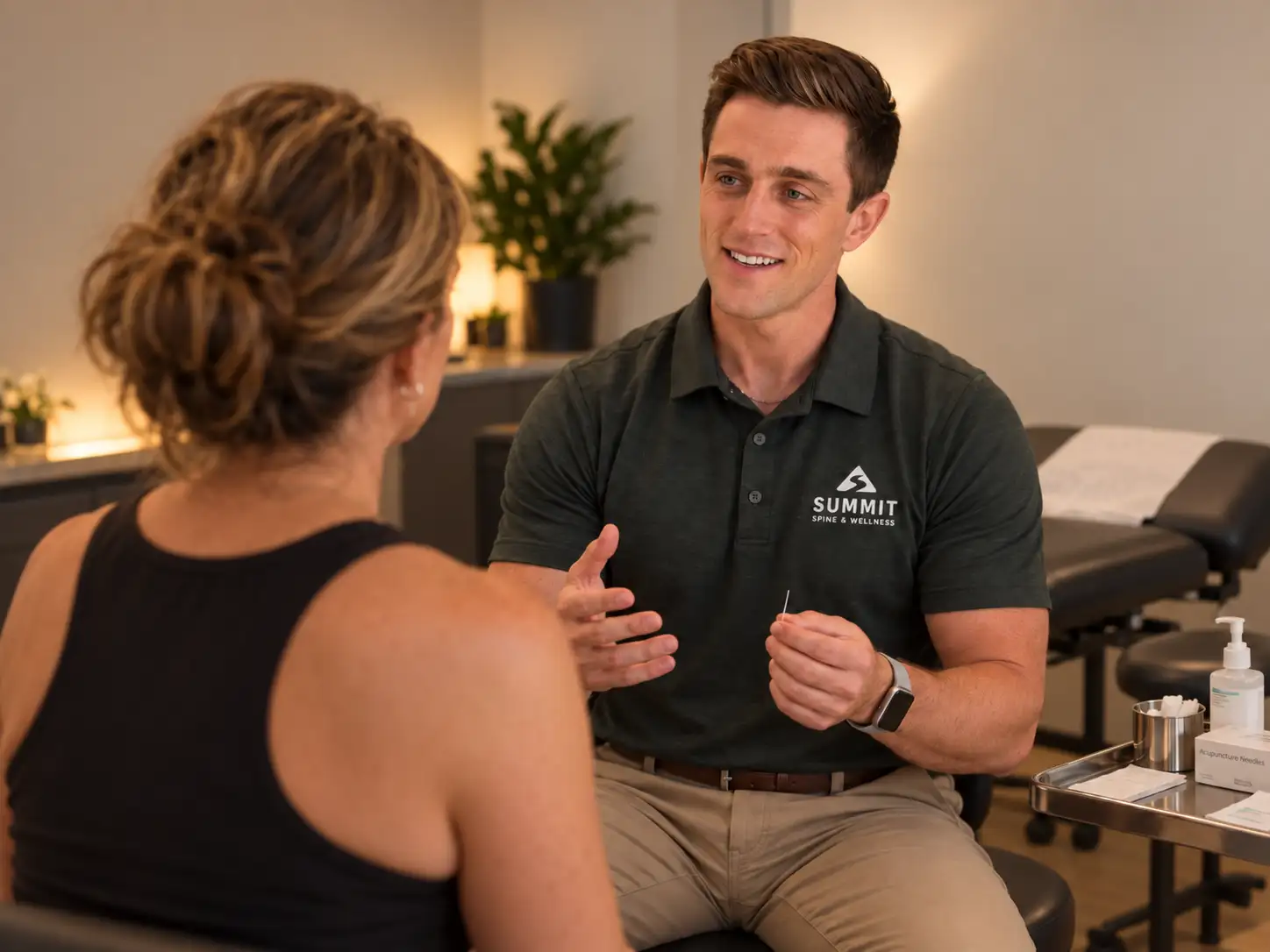
A consultation about needle-based treatment at Summit Spine & Wellness
PART OF THE PLAN

Dry Needling Works Best as Part of the Bigger Picture

Dry needling may be useful, but it should support a larger goal.

Depending on your evaluation, it may fit alongside other Summit services that address movement, strength, mobility and hands-on care.

Active Rehabilitation

Guided movement and exercise may help connect what happens during treatment to strength, mobility, and the activities you actually want to perform.

Explore Active Rehabilitation

Soft Tissue Therapy

Hands-on soft tissue care may also be considered when muscle tension or restricted movement is part of the problem.

Explore Soft Tissue Therapy

You may need one of these services.

You may benefit from several.

Or dry needling may not be necessary at all.

Dr. Hiebert will explain what he recommends and why rather than automatically putting every patient through the same treatment plan.

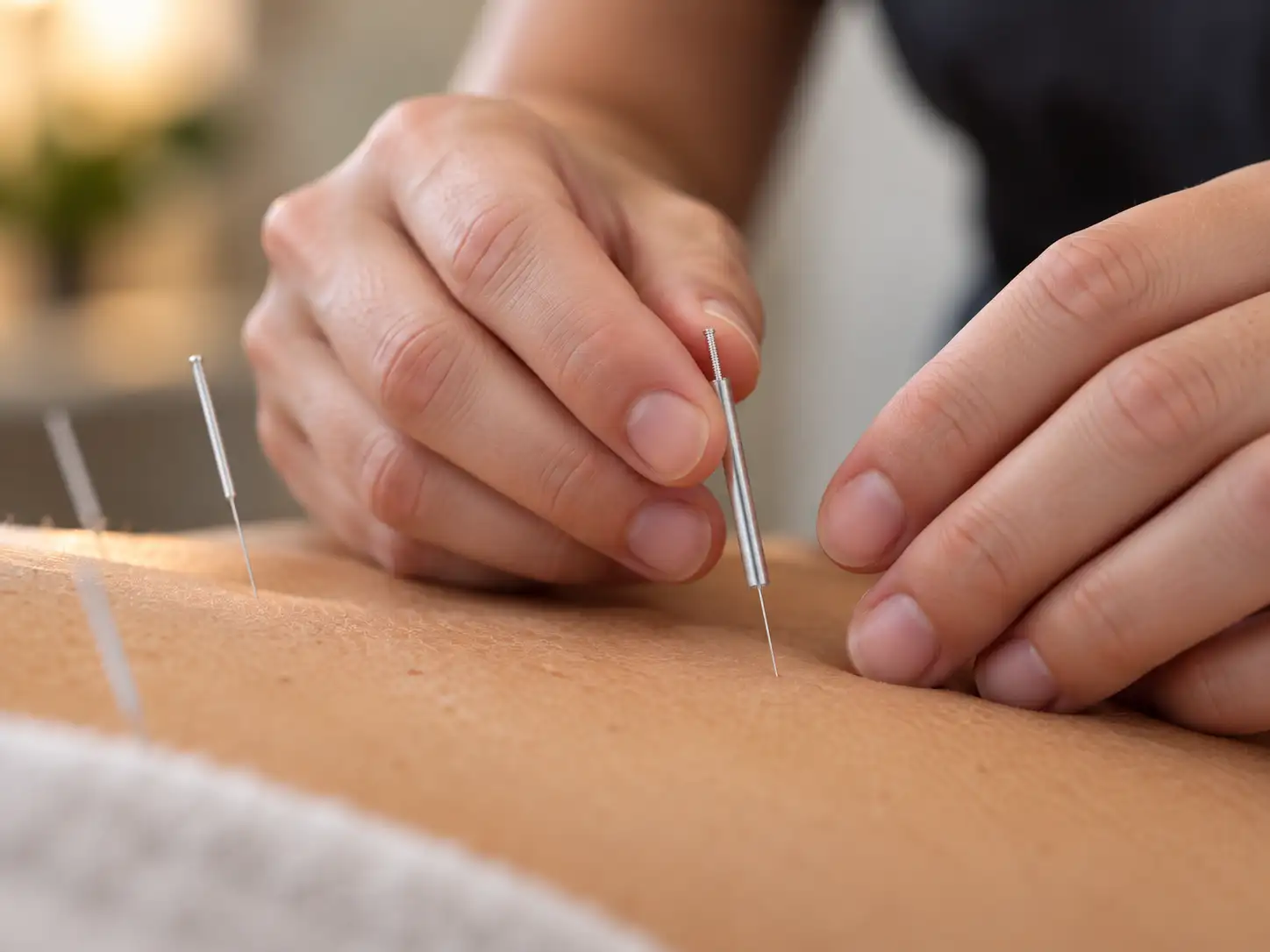
Close-up of a fine needle being positioned during treatment
INDIVIDUALIZED CARE

One Treatment Should Not Carry the Entire Plan

One treatment should not be expected to do everything.

If dry needling is part of your care, the bigger question is what needs to change outside of the treatment itself.

Depending on your situation, that may involve movement, mobility, strengthening, rehabilitation, chiropractic care or changes in activity.

Dry needling can be a useful tool.

But the tool should support the plan, not become the entire plan.

Exercise

Rehabilitation

Soft tissue therapy

Chiropractic care

Other appropriate conservative care

At Summit, the service should fit the plan, not the other way around.

Wondering Whether Dry Needling Should Be Part of Your Plan?

You do not need to choose the treatment before you come in.

Start by telling Dr. Hiebert what is bothering you and what you want to get back to doing.

Schedule an Evaluation
COMFORT & COMMUNICATION

Your Questions & Consent Matter

You should understand what is being recommended before treatment begins.

If you have never had dry needling before, ask questions.

If needles make you nervous, say so.

If you want Dr. Hiebert to explain what he is doing before he begins, ask.

And if something does not feel right during treatment, speak up.

You should never feel like you have to agree to dry needling simply because it was mentioned as an option.

Your comfort and consent are part of the process.

Why the treatment is being considered

Which area is being addressed

What the treatment involves

What you may experience

Potential risks and temporary effects

What other options may exist

If you decide you are not comfortable with dry needling, say so.

Your care should still feel like a conversation.

Understanding the recommendation is part of deciding whether it is right for you.

COMMON QUESTIONS

Common Questions About Dry Needling

Does dry needling hurt?

Some people experience brief discomfort. Sensitivity varies by person and treatment area. Tell Dr. Hiebert if something feels too intense or uncomfortable.

What is a trigger point?

A trigger point commonly describes a localized area within muscle tissue that feels especially tight or tender. Dr. Hiebert considers whether these findings are relevant to your symptoms or movement.

Is dry needling the same as acupuncture?

No. Both use thin needles, but they are different practices. At Summit, dry needling is a musculoskeletal technique focused on selected muscles, trigger points and movement-related findings.

Can dry needling help muscle tension?

It may be considered when relevant muscle tension or trigger points are identified during your evaluation. Results vary, and not every tight muscle needs dry needling.

Can dry needling be combined with rehabilitation?

Yes, when appropriate. It may complement active rehabilitation, exercise and other care based on your evaluation and goals.

Do I need dry needling just because I have a tight muscle?

No. A tight or uncomfortable muscle does not automatically mean dry needling is the right treatment. Dr. Hiebert first evaluates what is happening and what you want to improve.

What if I am nervous about needles?

Tell Dr. Hiebert. He can explain the technique before treatment begins, answer questions and discuss other options if you are not comfortable proceeding.

What if dry needling is not right for me?

Dr. Hiebert will discuss another direction, which may include soft tissue therapy, rehabilitation, corrective exercise, chiropractic care or referral when appropriate.

What is dry needling?

Dry needling uses thin, sterile needles placed into selected muscles and soft-tissue areas. At Summit, it is used selectively based on your evaluation, symptoms, movement and goals.

What does dry needling feel like?

You may feel a brief pinch, pressure, a muscle twitch, temporary sensitivity or a dull ache. Some areas may be more sensitive than others.

Can soreness happen afterward?

Yes. Mild soreness, bruising or minor bleeding can occur afterward. Ask Dr. Hiebert what to expect and let him know about concerns following treatment.

Can dry needling be combined with chiropractic care?

Yes, when appropriate. Dr. Hiebert may recommend dry needling alongside chiropractic, soft-tissue or rehabilitation care when the combination fits your needs.

Do I need dry needling every visit?

Not automatically. Whether it belongs in a visit depends on your evaluation, response to care and goals. The tool should support the plan.

Do I need to know whether I need dry needling before scheduling?

No. Start by explaining what is bothering you and what you want to get back to doing. Your evaluation helps determine which approach may fit.

Who may not be a good candidate?

Dry needling is not appropriate for everyone. Your health history, individual risk factors, treatment area and comfort with needles should be discussed before deciding whether to proceed.

The goal is not to needle everyone who walks through the door.

The goal is to recommend what makes sense.

LOCAL CARE

Dry Needling in Colleyville, Texas

Summit Spine & Wellness provides dry needling from our Colleyville chiropractic and wellness clinic.

If muscle tension, trigger points or movement limitations are interfering with work, exercise or everyday activity, Dr. Hiebert can evaluate what is going on and explain whether dry needling may have a place in your care.

Summit Spine & Wellness

6416 Colleyville Blvd., Unit 108
Colleyville, TX 76034

(682) 223-1308Get Directions

Ready for the Next Step?

Wondering If Dry Needling Makes Sense for You?

Tell Dr. Hiebert where you are having trouble, what you have already tried, and what you want to get back to doing. He’ll evaluate what is going on and explain whether dry needling or another approach may make sense.

No pressure. No one-size-fits-all treatment. Clear recommendations built around you.

6416 Colleyville Blvd., Unit 108 · Colleyville, TX 76034